
Yes, a cheap coop can work fine for a first flock as long as it is roomy enough, dry, and closed up tight at night. Price matters less than whether the coop covers the basics well.
Cheap coops often fail for simple reasons, not because the price was low. Look for a coop with a solid floor, a roof that sheds rain, and a door that closes all the way. A basic wooden hen house with a nesting box can do the job for a small group if the inside is easy to reach and clean.
Metal kits and mobile coops give you another low-cost route. A metal walk-in run, like the VEVOR Metal Chicken Coop listed at 6.56x6.56x6.56ft, lets birds get outside without a big build. A mobile coop with wheels, like the MEDEHOO Mobile Chicken Coop with Wheels and Run, can be moved to fresh grass, which keeps the ground from turning into mud. Check the maker's manual for how the wheels and run attach before you assume it fits your yard.
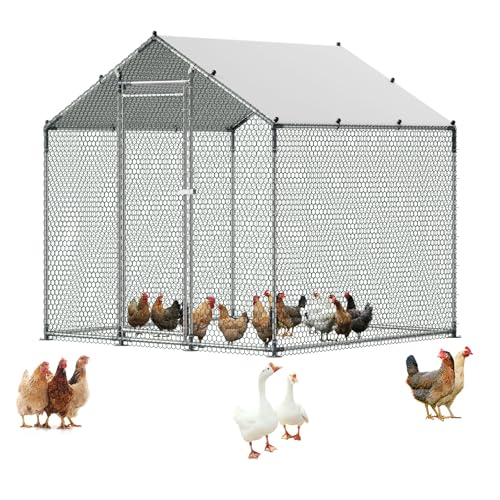
VEVOR Metal Chicken Coop 6.56x6.56x6.56ft Walk-in Run
A roomy walk-in run with a galvanized steel frame, a spire roof and a tarp cover for backyard flocks.
Product information
Our review: 3.8 out of 5
Product links
Cheap does not have to mean a lot of extra work. A few add-ons can make a budget coop more useful:
- A battery powered door with a timer or manual mode, so you do not have to be home at dusk to close it.
- A coop cleaner for the bedding area, such as the MICROBE-LIFT Chicken Coop Cleaner and Odor Eliminator, 1 Gallon, to keep smells down between cleanings.
- A solar predator light if raccoons or coyotes are in your area.
Spend first on the things that keep birds alive and dry. Save on paint, trim, and extras you can add later.
Size and Space Needs for Your Flock
A chicken needs more room than most first-timers expect, and a coop that looks roomy on the box can feel cramped once birds are inside. Start with the flock size you actually plan to keep, not the number you think might be fun someday. Coop space and run space are two different things, and both matter.
Many keepers use a rough rule of thumb for the coop itself, with a bit more room for the run outside. Plan on several square feet of floor per bird inside, and give the run a lot more. Check the maker's manual or a trusted local keeping guide for exact numbers, since the right amount depends on breed size, climate, and how much time the birds spend outdoors.

Outdoor Chicken Coop for 2-4 Chickens Wooden Hen House with Nesting Box
A wooden hen house with a nesting box, a ramp and a run fence for a small backyard flock.
Product information
Our review: 3.8 out of 5
Product links
Measure before you shop. Here is a quick way to check a coop listing against your plans:
- Count your birds, then add one or two spares in case of losses or a later addition.
- Multiply the coop floor length by width to get square feet, then divide by your flock number.
- Look at the roost bar length. Each bird needs room to perch without crowding the next one.
- Check the nesting box count. A common setup is one box for every few hens, though some keepers use fewer.
Watch for the ceiling too. A low, sloped roof can trap heat in summer and make it hard to reach in and gather eggs or clean. You want to be able to walk in, or at least lean in comfortably, without bumping your head every time.
If you are unsure about the right size for your flock, a mobile coop or a walk-in run can help you start small and grow later. Just be sure the space you pick still meets the minimums in your local rules, which vary by town and region.
Materials, Ventilation, and Predator Safety
Start with the frame and the floor, because those decide how long the coop lasts. Wood, metal, and plastic all work, but each one behaves differently in rain, sun, and cold. Wood is easy to repair with basic tools and holds up well if the boards are sealed or painted on the outside. Metal stays strong and resists chewing, but it gets hot in summer sun and can sweat inside on cold nights, so look for a spot with some shade.
Pay attention to the gaps. A coop can look solid and still have openings that let rain in or let a predator reach through. Check the joints where walls meet the floor, and look at the mesh on any vents or windows. Hardware cloth, which is a stiff welded wire mesh, holds up much better than thin chicken wire, which a raccoon can tear or pull apart. Use the thicker mesh on every opening a bird or a critter could reach.
Ventilation is where many budget coops go wrong. Birds breathe out a lot of moisture overnight, and that moisture needs a way out. Look for vents up near the roofline, not down at bird height where cold drafts hit the roost. A common approach is to leave a gap under the eaves or add a vented panel above the door. You want air moving across the top of the coop while the birds stay out of the direct breeze.
Predator safety comes down to closing things up at night. A door that drops or slides shut and a latch a raccoon cannot open with its paws are the basics. Many keepers use a two-step latch, where the second step needs both hands. Dig or stake the bottom edge of the run wire so animals cannot push under it. Solar predator lights can add a deterrent, and the Solar Predator Lights Outdoor, Coyote Deterrent for Yard, 4 Pack is one option if you want to cover a few spots around the run.
A few real hazards to plan for. Heat lamps used for chicks or cold birds are a fire risk if they touch bedding or are hung too close to wood, so use a fixture rated for the job and follow the maker's instructions for height and clearance. Keep extension cords out of the wet and away from birds that peck at them. If you use a cleaner like the MICROBE-LIFT Chicken Coop Cleaner and Odor Eliminator, read the label for ventilation and skin contact warnings and keep the birds out of the area until it has dried.
Pros
- A basic wooden coop for two to four chickens is one of the simpler ways to get started without buying a big, expensive structure.
- Mobile coops with wheels let you move the birds to fresh grass, which helps keep the ground in the run from getting worn down and muddy.
- Metal coops and runs are built to stand up to weather and predators better than many flimsy alternatives, so they can last a long time with basic care.
- Smaller coops cost less up front and take up less yard space, which suits a backyard setup that is still a bit of an experiment.
- Battery-powered coop doors with timers can close the birds in at night without you having to be out there every evening.
Cons
- Pre-built coops often cost more than the basic materials would, so a cheap-looking kit can still add up once you buy the run, the cover, and the hardware.
- Small wooden coops tend to have limited room for both birds and nesting boxes, which can leave you wanting a bigger house sooner than you planned.
- Metal coops can get hot in direct summer sun and cold in winter, so they may need shade or extra insulation depending on your climate.
- Mobile coops with wheels are handy for moving birds around the yard, but the wheels and frame can wear out faster on rough or uneven ground.
- Cheaper coops often have thin wire or flimsy latches, which may not keep out raccoons, coyotes, or other predators as well as a sturdier build would.
Quick Checklist Before You Buy
Before you hand over any money, run through a short list. Most first-timers skip a step or two, then end up buying a second coop a season later.
Start by writing down three things: how many birds you want, where the coop will sit, and how much sun and shade that spot gets across a day. Then compare every listing against those notes. A coop that fits your flock on paper can still be a poor match if the only flat spot in your yard is a slope that floods after rain.
Next, check the practical details that listings often bury:
- Does the door open and close easily with one hand, and can you reach the nest boxes without climbing?
- Is the floor raised or solid enough that you can clean it without tipping the whole thing?
- Are the nest boxes removable, so you can wash or replace the lining?
- Are the hinges, latches, and screws the kind you can replace later if one wears out?
- Can you get the coop through your gate and around the corners of your yard?
Last, look at the total cost, not just the sticker price. Add up the coop, the run, any cover, the lock or latch, and a cleaner for the bedding area. Then ask whether you need a power source for a door or light, and whether you have an extension cord or outlet nearby that stays dry. If the answer is no, a battery-powered option may fit better. Check your local rules on coop size and placement before you commit, since those rules differ by town and region.

